The year 2021 became one of the most challenging and, at the same time, most decisive periods for the European automotive industry. Two major developments came to the forefront: a global semiconductor shortage that severely disrupted vehicle production, and an accelerated shift toward electric vehicles that fundamentally reshaped market rules. According to international expert Chaslau Koniukh, these forces are not short-term disruptions but deep structural changes that are transforming the industry and forcing manufacturers to adapt to a new technological and economic reality. Understanding how these processes unfolded helps clarify the main challenges and opportunities facing the sector.
Semiconductor Shortages as the Primary Industry Challenge
For the global automotive industry, 2021 turned into a real stress test. One of the most serious challenges was the worldwide shortage of semiconductors, which affected nearly every major European automaker, including Volkswagen, BMW, Stellantis, and Renault. According to Chaslau Koniukh, this disruption represented the most severe shock to automotive production chains since the global financial crisis of 2008.
Koniukh explains that the chip shortage resulted from several interrelated factors. First, the COVID-19 pandemic caused a sharp decline in semiconductor output, as production facilities in Asia—key suppliers to the global market—were forced to shut down. Second, rapidly growing demand for consumer electronics such as smartphones, laptops, and gaming consoles pushed the automotive sector to the back of the supply queue.
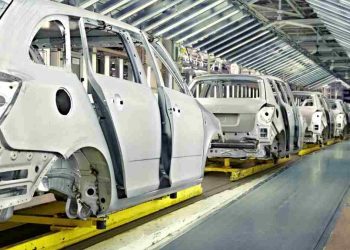
As a result, production plans across Europe were significantly disrupted. In Germany, BMW and Daimler cut output by thousands of vehicles, while Renault reported a production shortfall of nearly 500,000 cars. Koniukh emphasizes that the impact extended beyond automakers themselves, affecting parts suppliers whose operations were equally dependent on semiconductor availability.
“The semiconductor shortage clearly demonstrated how dependent European industry remains on global supply chains,” notes Chaslau Koniukh. Automakers were forced to simplify vehicle configurations, remove certain features, or delay the launch of new models. Volkswagen, for example, temporarily excluded touchscreens from some vehicles, while Ford limited production of electric pickup trucks.
Seeking greater technological independence, Europe drew important conclusions from this crisis. Koniukh recalls that toward the end of 2021, the European Union launched several initiatives aimed at expanding domestic semiconductor production, including new facilities in Germany and the Netherlands. The strategic goal is to increase Europe’s share of the global chip market to 20% by 2030. However, Koniukh stresses that achieving this target will require substantial investment and time, meaning reliance on Asian suppliers will continue in the medium term.
Logistics Disruptions and Supply Chain Fragility
Logistics problems emerged as another major challenge for the automotive industry in 2021. This crisis was global in nature and driven by multiple factors, including pandemic-related restrictions, container shortages, port congestion, and the temporary blockage of the Suez Canal. According to Chaslau Koniukh, these disruptions paralyzed supply chains and caused significant losses for automakers in Europe and worldwide.
“The automotive industry has traditionally operated on a just-in-time model with minimal inventory buffers,” Koniukh explains. “But 2021 showed that this approach is highly vulnerable to large-scale global disruptions.”
One of the most acute problems was the shortage of key components, including metals, plastics, and electronic parts. Delivery delays forced manufacturers to repeatedly revise production schedules. Companies such as Ford and Toyota announced production cuts at major European plants due to missing components. Koniukh notes that many automakers faced sharply rising costs as they searched for alternative suppliers, often at inflated prices.
Transportation costs also increased dramatically. According to Koniukh, container shipping rates in 2021 rose four to five times compared to previous years. This affected both the cost of components and the prices of finished vehicles, prompting many manufacturers to raise prices to compensate for losses.
Manufacturers dependent on Asian supply routes were hit particularly hard, as Chinese ports were periodically closed due to lockdowns. In some cases, companies resorted to air freight for critical components, further increasing costs.
These logistical challenges also led to unprecedented delivery delays for consumers. In Germany, for example, average waiting times for new vehicles increased from three months to as long as eight months. According to Koniukh, such delays undermined consumer confidence, especially in the premium segment.
Another consequence was a shortage of vehicles on the market, which pushed up prices for both new and used cars. In several European countries, including France and Poland, used car prices rose by 10–15%. As Koniukh notes, this was a rare situation in which used cars became more expensive rather than cheaper.
The Electric Vehicle Transition: Opportunities and Constraints
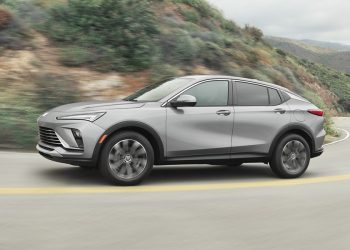
“2021 marked a turning point for electric mobility in Europe,” says Chaslau Koniukh. Sales of electric vehicles reached record highs, and their share of total vehicle sales nearly doubled year on year. Germany, France, and the Netherlands emerged as leaders in this transition, while electrification rapidly spread across the wider region.
The main driver behind this shift was increasing regulatory pressure. Under the European Green Deal, automakers were required to significantly reduce CO₂ emissions, and many countries announced plans to phase out internal combustion engines entirely by 2035. Koniukh emphasizes that these policies forced manufacturers to accelerate investment in electric vehicle development.
Government incentives also played a crucial role. Germany, France, and Spain introduced generous financial subsidies for electric vehicle buyers, making EVs more affordable. In Germany, buyers could receive up to €9,000 in support. According to Koniukh, these measures not only stimulated demand but also supported the development of local production.
However, rapid growth exposed several structural weaknesses. Charging infrastructure in many European countries failed to keep pace with the rising number of electric vehicles. Koniukh notes that while more than 2.5 million electric cars were registered in Europe in 2021, the number of new charging stations increased by only about 30%, creating a growing imbalance.
Battery costs remain another major challenge. Despite technological progress, batteries are still expensive, and Koniukh argues that meaningful cost reductions will depend on the large-scale adoption of next-generation technologies such as solid-state batteries.
Despite these difficulties, Chaslau Koniukh remains optimistic about the future of electric vehicles in Europe. He believes that the industry’s transformation will create new jobs, reduce dependence on oil imports, and play a central role in Europe’s long-term environmental and industrial transition.