Many of the most common roadside breakdowns of the summer and winter are preventable if you follow a seasonal maintenance schedule. These tips will help keep your car running smoothly throughout the hottest days of summer and the coldest of winter.
Tires Do More Work Than Most People Realise
The tire’s depth and pressure often fluctuate with changes in temperature, and these factors determine whether you’ll have a safe drive.
With every 10-degree decrease in the outside temperature, you lose 1 to 2 pounds of pressure in every tire. Although you may think it’s not a big deal, under-inflated tires reduce the contact area between the tire and the road. So, your stopping distance becomes longer and it’s easier to hydroplane over wet roads. Over-inflated tires are also a problem since the tire can’t grip the center of the tire as well, leading to unpredictable vehicle handling.
Make sure to check your tire pressure when it’s cool, meaning you haven’t driven for over a mile or two. And while you’re at it, check the tire treads too. Old and worn out tires are unable to displace water when it’s raining heavily, which means your car will float on the water.
The Battery and Cooling System Work Hardest Under Stress
According to AAA, heat is the number one reason for battery failure and diminished battery life – despite the fact we all park the car outdoors in midday sun and let the hood bake shut. Most drivers don’t realize their battery is being cooked, and that battery problems are typically one of the top causes of summer breakdowns. The heat actually causes internal battery corrosion that weakens the unit throughout the summer, and then the cold months come and chemically the battery doesn’t have the necessary oomph to turn the engine over and start your car.
A battery that’s running fine in temperate conditions may quit completely in very hot or very cold weather. Before a change in season, have the battery’s voltage and cold cranking amps tested in a check that takes less than five minutes – not after you’re waiting for a tow truck.
The cooling system is much the same. Old, depleted coolant may still be circulating, but the boiling point and freezing point have gone haywire. A thermostat that’s just a few degrees off can turn your engine from safe to dangerous in minutes. Have the cooling system flushed and replaced at the manufacturer’s recommended interval – not whenever you notice something looks crusty in there.
All of these systems can be checked at home with a bit of automotive expertise, but for truly reliable care, a professional car service is the best way to catch deeper vulnerabilities before the season’s likely failure points come around.
Rubber Components Fail Quietly, Then All At Once
The serpentine belt is not much for warning; when it goes, power steering, the alternator, and the water pump can all stop at once. Extreme heat serves to degrade the rubber compound faster, and the thermal expansion and contraction that comes with seasonal changes… the belt may well be full of micro-cracks, and it takes an awfully good look to see them.
The same is true for coolant hoses. A hose that feels perfectly firm at room temperature can soften up under sustained heat until it swells or splits under pressure.
When you’re eyeballing rubber components, such as the serpentine belt, feel around for “glazing” – that hard, shiny surface that indicates the rubber has begun to harden – and look for any cracking near the clamp points, where stress is at its greatest. These are cheap parts to replace on a scheduled basis and expensive problems to deal with mid-journey.
Visibility Is Non-Negotiable In Poor Conditions
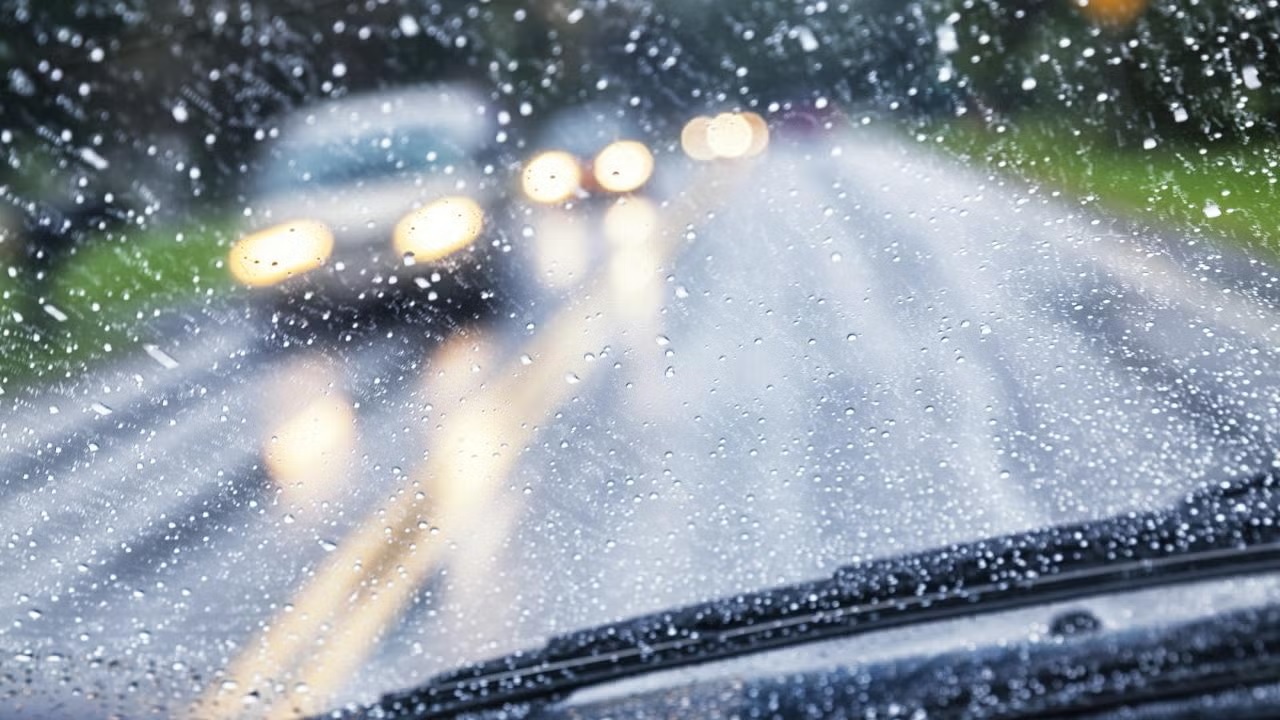
Wiper blades are usually changed after they’re needed… when you’re already on the road trying to see through streaks of rain. The rubber edge that swipes your windshield is also taking a beating over summer, softening under UV exposure until it hardens and warps. In the off-season, it’s getting shredded by the abrasive slush and ice it’s meant to push off the glass.
For this reason you might as well just swap in a fresh set for both fall and spring: It’s the cheapest upgrade you can make for better sightlines when you need them most.
Brake Performance Under Heat and Moisture
Brake fade becomes more likely given sustained high-temperature driving – whether that’s long downhills, summer stop-and-go, or repeated heavy braking in the wet. The friction material and the fluid both overheat.
Brake fluid is hygroscopic, meaning it absorbs water over time. That lowers the boiling point of the fluid, exactly when you don’t want the system to fail. Bleeding and replacing brake fluid is easy and frequently neglected.
Your car won’t alert you to a week of extreme weather on the way. The time to discover what’s nearly gone is in advance, not when circumstances dictate that you find out the hard way.