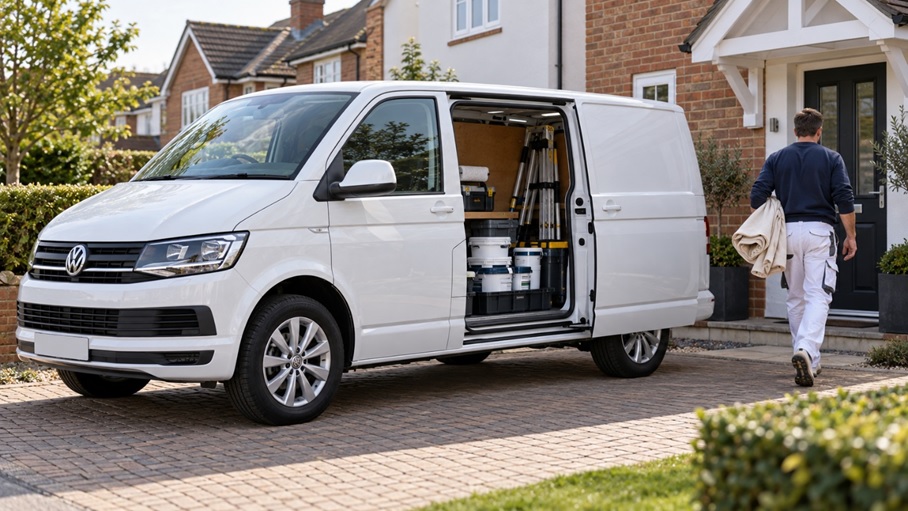
Dust sheets occupy one corner, paint containers another, and the steps somehow need to remain accessible behind both. For a decorating business looking for a VW transporter for sale, a useful vehicle starts with these ordinary details. The right configuration should accommodate the equipment used regularly while remaining manageable outside the homes and premises where the work happens.
Decorating creates a distinctive transport requirement. Some loads are bulky, others surprisingly heavy, and clean materials often travel alongside equipment returning from preparation work. Planning around those differences helps turn a shortlisted Transporter into a practical buying decision.
Build the Load Around a Real Project
Choose a recently completed job and list everything taken to it.
A single-room repaint may involve a modest collection of tools and materials. A larger refurbishment could add sanding equipment, extraction, additional steps and several people’s belongings.
Use a project typical of your business rather than the largest commission you hope to win. Then identify the equipment that determines the minimum space required.
Folded steps, long poles and protective cases deserve measurements. Their shape can matter more than the total cargo volume stated in an advert.
Where possible, arrange to examine a representative vehicle with those measurements available. Check the space remaining after any proposed lining or storage system is fitted.
A load plan should also show how equipment will be secured. Finding enough floor area is only part of the task.
Give Clean Materials Their Own Space
Decorators transport items at very different stages of use.
Freshly cleaned coverings and unopened materials may travel beside dusty sanding equipment or tools awaiting cleaning. Without an agreed layout, separating them becomes harder as the week progresses.
Plan suitable containers and designated locations. Keep clean protective materials away from equipment that could transfer dust or residue.
Paints and other products should remain in appropriate, securely closed packaging and be transported according to their manufacturers’ instructions. Check any product-specific storage requirements rather than assuming every material can remain in a parked van.
Think about the return journey as well. Used equipment needs a planned place, especially when tomorrow’s materials have already been collected.
Access Matters More Than a Perfect Packing Photograph
An impressive arrangement can still be inconvenient at the first appointment.
If the steps are needed before anything else, burying them behind supplies creates unnecessary unloading. The same applies to frequently used preparation tools.
Decide which equipment needs access through each available door. Check the openings and layout of the exact Transporter being considered; different generations and configurations should not be treated as interchangeable.
Before paying for fitted storage, test a simple loading sequence:
- Retrieve the protective materials needed on arrival.
- Remove the equipment used for preparation.
- Access the materials required later in the job.
- Repack used equipment without contaminating clean items.
The sequence should work without repeatedly moving heavy containers.
Count Weight Separately From Space
A partially empty van can still be carrying a substantial load.
Materials, occupants, racking and accessories all contribute. Assess the planned setup against the carrying limits of the specific vehicle, including relevant axle limits.
When discussing options with SwissVans.com, provide the approximate weights and dimensions of the normal load. Explain whether the van usually carries one decorator or a team.
Ask a competent installer or supplier to assess the arrangement where fitted equipment is involved. Weighing the completed working setup may be appropriate when estimates leave uncertainty.
Avoid choosing on body length alone. A longer vehicle does not automatically establish how much weight it can carry.
Consider the Customer’s Street
A decorating van spends much of its time near occupied homes, shared drives and commercial entrances.
Review the places where you work most often. Is parking usually available close to the property? Can the required doors be opened safely? Would additional vehicle length create a recurring difficulty?
Consider the route from the van to the work area too. Equipment that can be carried comfortably from a nearby driveway may need a different handling plan when parking is farther away.
Any roof equipment changes the vehicle’s overall dimensions and requires suitable loading arrangements. Confirm compatibility, limits and clearances before adding it to the specification.
A manageable vehicle can make repeated collections from the load area less disruptive throughout the day.
Buy the Condition and Specification You Have Checked
For a used Transporter, review the documented maintenance history and arrange an appropriate inspection. Check doors, locks, flooring and evidence of previous installations alongside the mechanical assessment.
For a new vehicle, confirm exactly which equipment is included. Photographs and demonstration models may show features absent from the quoted version.
In either case, request a written specification and full price breakdown. Record any preparation, repairs or accessories agreed before collection.
Finally, test the cab as carefully as the cargo area. Comfortable seating, clear visibility and understandable controls matter when the working day begins and ends with a journey.
A well-chosen Transporter should let a decorator arrive with the right materials, reach equipment easily and pack away in an organised manner. Those practical benefits provide a sound basis for choosing between otherwise attractive vehicles.